


What Kind of Events This Checklist Covers
“Event” covers a lot of ground, so it’s worth being specific before diving into a checklist. This guide is built for the events that marketing managers and business owners plan and attend for business reasons:
- Trade shows — exhibiting at an industry show, whether that’s a small booth or a full activation.
- Conferences — hosting your own event, from a single-day client conference to a multi-day industry gathering.
- Corporate events — everything from a product launch to an internal all-hands that still needs to look and run professionally.
- Virtual and hybrid events — any of the above, run partly or entirely online.
Each format has its own quirks, covered category by category below, and they share the same strategic question underneath: is this event pulling its weight for the marketing budget it’s costing?
Your Event Strategy Checklist
Every checklist below assumes the strategic groundwork already happened. Get clear on these before locking in a budget or a venue:
- Goal defined: lead generation, brand visibility, relationship-building, or a mix.
- Target audience identified: who actually needs to be in the room, and why?.
- Budget set to match that goal.
- A way to measure success decided in advance: leads, contacts, or visibility.
- Follow-up owner.
This step matters most for trade shows and B2B conferences. The distributor and rep relationships that drive a lot of B2B purchasing decisions get built face-to-face on a show floor, and that makes the event itself one of the highest-value touchpoints in the whole marketing plan.
The data backs this up: in Content Marketing Institute and MarketingProfs’ most recent B2B benchmark survey of 980 marketers, 52% named in-person events their most effective distribution channel, tied with webinars and ahead of email, organic social, and company blogs, according to Content Marketing Institute.
The Corporate Event Planning Checklist
With the strategy set, here’s the actual corporate event planning checklist: a general corporate event checklist for budget and venue, then a trade show checklist, a conference checklist, or a virtual/hybrid checklist depending on your event’s format. Copy this into your own planning doc and check items off by category as you go.
Budget & Timeline
- Total budget set, with 10-15% held in reserve for the changes that always come up (a vendor price increase, a headcount bump, a last-minute AV need).
- Timeline set working backward from the event date: 3-6 months out for a mid-size event, longer if speakers, sponsors, or multiple exhibitors need their own advance notice.
- Key deadlines calendared: deposit due dates, vendor cutoffs, shipping/drayage deadlines (usually earlier than people expect).
Venue & Logistics
- Venue matched to the actual goal and audience.
- Capacity and accessibility confirmed separately for exhibitors, speakers, and attendees.
- Vendors booked and confirmed in writing: catering, AV, signage, transportation.
- A single point of contact assigned for every vendor, so problems route to one person on-site.
Trade Show Checklist (If You're Exhibiting)
- Booth space reserved and booth design/signage ordered with reprint time built in.
- Shipping and drayage scheduled against the show’s real deadlines.
- Booth staff scheduled and briefed ahead of time on the actual pitch.
- Lead capture system decided in advance: badge scanner, form, or CRM integration.
- Collateral quantities matched to expected traffic.
Conference Checklist (If You're Hosting)
A conference planning checklist starts with the agenda. Room logistics follow from there.
- Agenda and speaker lineup locked before logistics get finalized.
- Speakers confirmed on topic and technical requirements, with a backup plan if someone drops out.
- Registration and check-in system set up, with a clear data trail back to actual attendance.
- Room capacity matched to expected attendance per session.
- Sponsor and exhibitor space, signage, and recognition agreed on in writing well before the event.
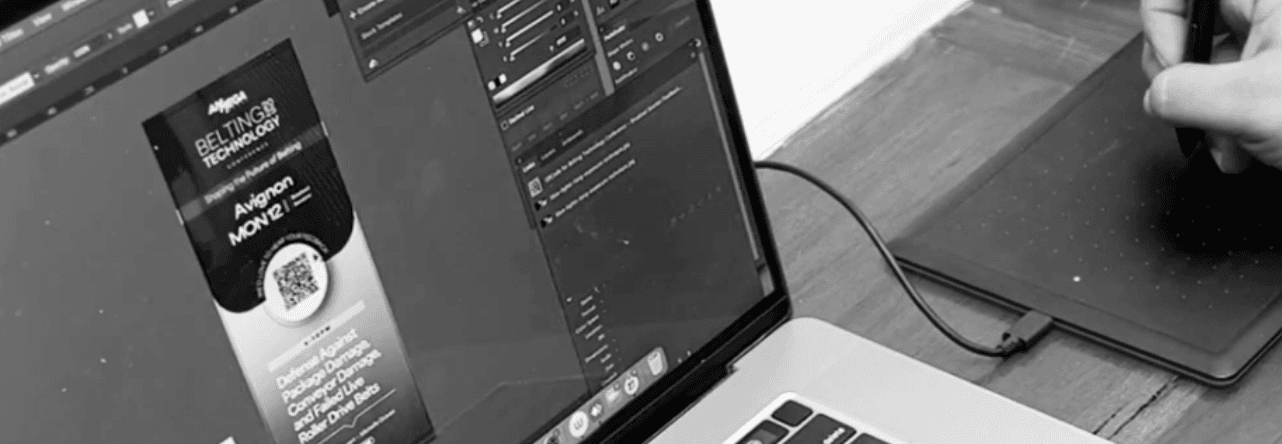
Blue Halo’s work with AMMEGA Group is a real example at conference scale: full support for the 2025 Belting Technology Conference, including app and website development, vendor coordination, floor plan layout, print graphics, and day-of management.
Virtual & Hybrid Checklist (If Any Part Goes Online)
- Streaming platform selected that can handle expected attendance.
- Run-of-show built around screen time from the start.
- Engagement plan in place for the online audience: chat, polls, breakout sessions.
- Separate AV and staffing plans built for the in-person and virtual audiences, if hybrid.
Virtual event production has real scale behind it now. The virtual events market is projected to grow at an 18.4% compound annual rate from 2026 to 2033, expanding from roughly $145.0 billion to $472.9 billion over that period, according to Grand View Research.
This Is More Than a One-Time Thing
A single event, run well, is a good result. A repeatable process is a better one. The relationships built at this year’s trade show, the attendee list from this year’s conference, and the content generated from the event itself (photos, recap posts, case studies) all carry forward into next year’s plan and into the rest of the marketing calendar in between.
Treating each event as a standalone project means starting from zero every time: a new checklist, a new set of vendor relationships, a new guess at what worked. Treating it as an ongoing part of the marketing strategy means each event gets easier to plan and better at generating business than the one before it.
Your After-the-Event Checklist
A logistics-only checklist usually stops once the doors close. Here’s the part that actually determines whether the event paid off:
- Leads and contacts entered into a CRM or contact list within a few days.
- Follow-up outreach sent to leads, sorted by priority.
- Thank-yous sent to speakers, sponsors, and vendors.
- Internal debrief held on what worked and what didn’t, while it’s still fresh.
- Event recap content created (photos, a blog post, social posts) to extend the event’s reach.
- Results measured against the original goal: leads generated, relationships built, or visibility earned.
If Your Team Is Stretched Thin, That's What We're For
A few signs mean it’s worth bringing in an event marketing agency rather than running everything internally:
- The event is a real lead-generation investment, and nobody on the team owns turning attendee data into a follow-up sequence.
- The event competes with everyone’s day-to-day marketing work for the same hours, and the follow-up usually loses out because it doesn’t have the event’s hard deadline forcing it.
- The team is planning multiple events a year, or one event large enough that logistics alone become a full-time job for weeks.
Blue Halo’s event management team covers all of it: booth design, signage, and show-floor collateral for exhibitors; full planning, vendor coordination, and day-of execution for conferences and corporate events; and a follow-up strategy that turns the event into a real pipeline.
If you’re attending a tradeshow or planning a conference, or corporate event and want a hand with any part of this checklist, reach out to Blue Halo and let’s talk through what your event needs.